Trick: Paws Up - The Trick That’s Equal Parts Adorable and Skillful

Updated: Aug 22, 2025

Introduction
You’ve probably seen this before — your dog puts their two front paws up on a bench, a log, or… maybe your kitchen counter (uninvited). The “Paws Up” trick is like that, but domesticated, civilized, and bribed with snacks.
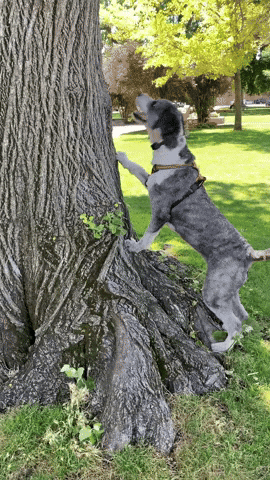
Here’s the difference: Instead of a manic leap into your chest, controlled paws up is intentional. Your dog places only their front paws on a chosen object and holds that position. Think of it as a polite version of jumping — still cute, but without the flying elbow to your ribs.
As ethologist Dr. Ádám Miklósi notes, skills that involve balance and positional control not only improve a dog’s motor coordination but also give them “confidence in navigating diverse environments” (Miklósi, Dog Behaviour, Evolution, and Cognition, 2nd ed.). So yes, you’re building adorable photo ops and a better brain.
New Trick or New Habit
Dogs naturally rear up on their hind legs or rest their front paws higher for surveying, climbing, or begging. In fact, according to Karen Pryor Academy training archives, this vertical push engages “core, shoulder, and flexor muscles,” which are great for physical conditioning.
The trick here is turning that natural impulse into a commanded behavior. When they understand “Paws Up” means this object, this duration, in this way, it moves from random habit to coordinated communication.
Five Times When It’s Useful or Silly
Polite Hugs on Cue – Skip the “velociraptor attack” and instead get a calm paws-up hug.
Reaching New Heights – Like checking out what’s on a table with permission.
Climbing Starter Move – Essential for agility obstacles or hikes with boulders.
Barrel Pushes – Circus dog vibes. Bonus points for floppy ears while doing it.
Impromptu Photo Ops – The “King of the Couch” pose never disappoints.
According to the University of Bristol’s Canine Behaviour Research group, controlled, interactive exercises like this can reduce stress and channel natural problem-solving instincts. So yes — it’s silly AND smart.
Lesson Plan
Goal: A steady back-leg base, front paws confidently placed on a stool/incline, held for a few seconds.
Advanced Goals: Balance on rolling barrels, pose for longer durations, or stand on novelty objects for photo shoots.
You’ll Need: Clicker (or verbal marker), high-value treats, safe low-height object (step stool, low bench, small incline).
Steps:
Start with your dog sitting half a body length from the object.
Hold a treat just above the object to lure the front paws upward.
The moment those paws land — mark and reward.
Repeat in short bursts, gradually requiring a longer hold before payment.
Increase object height slowly over several sessions.
Positive reinforcement research from Dr. Sophia Yin emphasizes short, achievable steps and treating every mini-success to prevent frustration and boost confidence.
Human Oopsies 🐾
Jumping to a tall target too soon (“My dog’s never done this but sure, let’s try the barstool!”).
Forgetting to reward the first tiny attempts, making the dog think their effort was meaningless.
Training too long in one go — mental fatigue kills motivation.
Canine Oopsies 🐶
Popping up and immediately hopping off (patience is a learned skill).
Trying to leap over the prop entirely. Ambition is admirable — but not helpful here.
Turning the stool into a chew toy (puppies, we see you).
Safety Notes ⚠️
Height matters — for small dogs, start with something no higher than their chest.
Avoid slippery or unstable platforms. A wobble board is great for advanced work but can be scary early on.
Watch for signs of strain — senior dogs or those with joint issues need veterinarian clearance for new tricks.
The American College of Veterinary Sports Medicine warns that repetitive jumping or forceful rearing can put strain on elbows, shoulders, and lower back — so moderation and surface choice matter.
Conclusions
“Paws Up” is more than cute — it’s a controlled exercise that builds balance, muscles, communication, and trust. It’s an intermediate AKC trick, but many dogs get a feel of what is asked, easily.
Plus… once your dog masters it, you can add barrels, boxes, park benches, or even your shoulder for selfie photos. Your social feed will thank you — and so will your dog’s brain.
Thanks for growing with us! 🐾


Comments